Thursday, July 30, 2009

Dolphin Strategies. Read the article; it is funny!

Dolphins are always thinking of new ways of getting food. They devise many new strategies, and then tell others of their methods. In this way, dolphins are becoming more and more efficient. Dolphins also learn quickly, and that is a key ability to mastering these new methods.
In the wild, dolphins put sponges over their beaks to protect themselves from stingers of some fish. This has become widely popular with many dolphins.
Dolphins in captivity also use new methods to earn more food, praise, and rewards from their trainers, and this article show examples of some of them. 


Saturday, June 20, 2009

Hector's Dolphins


Hector's dolphins are tiny little dolphins, at the very most about five feet long, averaging about 4 feet long. They live around New Zealand, and are quite endangered. One thing you can see that is different about them from other dolphins is that they are the only dolphins that have dorsal fins that are curved at the tip; the fins are almost like semicircles.

Image: http://www.otago.ac.nz/news/news/2001/17-08-01-dolphin.jpg; The image shows a breaching Hector's dolphin. Notice the oddly shaped fin.

Saturday, June 13, 2009

Your favorite-Bottlenose Dolphins!


Bottlenose dolphins (Tursiops truncatus) are probably the most commonly known dolphins. They are shown in various films and other forms of media, as they are extremely curious, friendly, and mild-mannered. They usually live in warmer waters.

Monday, June 8, 2009

Stenella frontalis


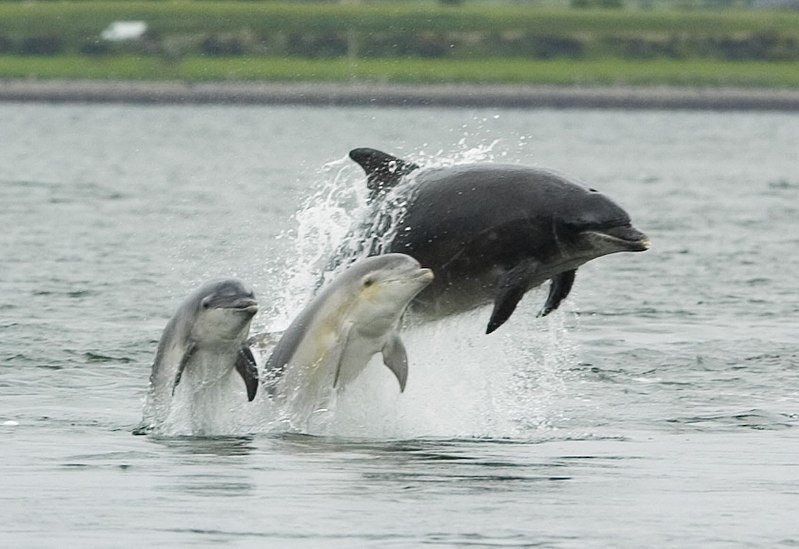
This post is about a dolphin species which is Stenella frontalis, or the Atlantic Spotted Dolphin. Did you know that when they are young, they are born without spots, but as they get older, the spots keep coming? Also, they are extremely hard to track, unless they have a scar or any other permanent mark, as their spots can keep changing. Some have spots so close together, the dolphins seem to have a large, dark blur on their bodies, and some have distinct spots which are far away from each other.


Image: http://www.arkive.org/media/E7/E72D1DEC-036F-4A34-9A97-EE55879C5C3C/Presentation.Large/photo.jpg; The image shows an Atlantic Spotted Dolphin with its solid-colored calf

Monday, May 11, 2009

2nd post


Hi again! Now...getting back to the topic of dolphins

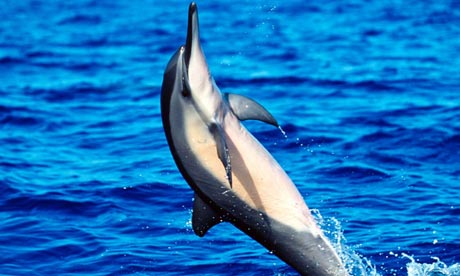
Today we will look at a different dolphin, which is Stenela longirostris, or the spinner dolphin. These agile dolphins love to do what they do best, which is, of course, spinning. They have been recorded doing over 10 spins in one jump! They live largely between the tropics of Capricorn and Cancer.

Picture: http://static.guim.co.uk/sys-images/Guardian/Pix/pictures/2008/03/15/Spinner-Dolphin-460x-276.jpg

Sunday, May 10, 2009

About the "Anonymous"...

Hi everyone, quick thing, let us not use real names on this okay? There's been this weirdo "i heart music" and "..." who has been vandalizing the blog from the start, and I'm somewhat concerned by the fact that he/she/it knows my name...

So from now on, let us keep this fully anonymous for safety reasons. Plus, wouldn't it be awesome if the news starts talking about a mysterious organization that is saving the cetaceans?


Okay thanks! No more names from now on.

First Actual Post!


Hi again!

I'll put something for today. Did you know that some killer whales, which are actually dolphins, such as those living in Patagonia, actually come up to the shores to hunt for seals? Imagine the fright of their prey!


BTW, I'll actually start putting up ads quite soon. Please, please, please, get more people to visit!